
Quick answer
Dive sites in Sharm El Sheikh open daily from 07:00 to 17:00, with a 15 USD per-person conservation fee collected at park entrances like Ras Mohammed. First-time divers should arrive between 07:00 and 10:00 to avoid midday heat, benefit from better visibility, and encounter smaller crowds on the reefs. Most beginner-friendly sites lie within Ras Mohammed National Park on the Sinai Peninsula.
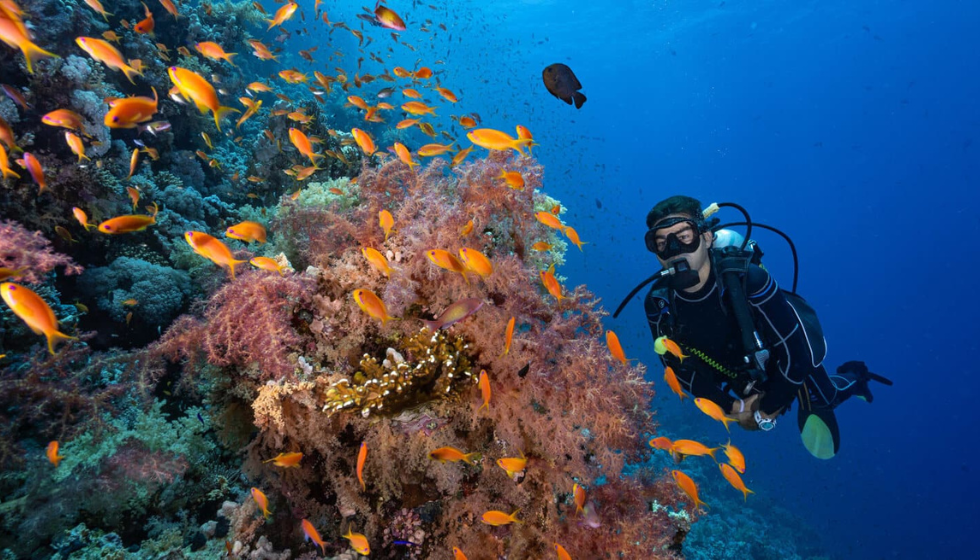
Eighty percent of first-time Red Sea divers begin their underwater experience at sites within a thirty-minute boat ride of Sharm El Sheikh's marina. The northern Red Sea hosts over two hundred coral species in water rarely colder than twenty-two degrees Celsius, conditions that let beginners focus on buoyancy and breathing rather than thermal protection. Ras Mohammed National Park anchors the region's beginner dive infrastructure. The park's southern tip funnels nutrient-rich currents through channels flanked by shallow coral gardens, creating drift dives suitable for divers on their second or third descent. Entry requires payment of the conservation fee at the park gate before boats depart. Most dive centers include this fee in packaged instruction rates, though independent divers pay on-site. Water clarity peaks in early morning hours when wind has not yet stirred surface chop and when the angle of sunlight illuminates coral walls without glare. Sites like Shark Reef and Yolanda Reef sit in open water beyond the shelter of coastal bays, making arrival time critical for beginners still mastering equalization and finning technique. Afternoon sessions face larger swell and reduced visibility as boat traffic increases. Sharm El Sheikh diving for beginners revolves around shallow wall dives and sandy-bottomed bays where maximum depths rarely exceed twelve meters. Instructors favor these profiles because they allow extended bottom time and controlled ascents. The reef structures themselves guide navigation—beginners follow the wall edge rather than compass bearings, reducing cognitive load during early dives when air consumption runs high. Dive operators schedule instruction around tidal exchange rather than clock time, but the 07:00 park opening ensures that morning departures align with slack water periods. Late entries compress the surface interval before a second dive, a constraint that matters less to single-dive beginners but shapes multi-dive itineraries for those progressing toward open-water certification.
“Water clarity peaks in early morning hours when wind has not yet stirred surface chop and when the angle of sunlight illuminates coral walls without glare.”
The Best Time for Sharm El Sheikh Diving for Beginners
The best arrival window for beginner diving is 07:00–10:00 to minimize exposure to mid-day heat and reduce crowding on the water. Early arrivals provide optimal conditions for visibility and calm conditions for those new to the sport.
April to May
Moderate25°C to 30°C. Pleasant temperatures for beginners.
Water visibility remains high and winds are typically calm during these months.
October to November
Moderate26°C to 31°C. Warm water, cooler air.
These months offer a balance between warm sea temperatures and comfortable air for post-dive periods.
Weekday mornings
Low—
Arriving during the 07:00–10:00 window ensures less congestion at dive sites and better access to instruction.
Verdict: The best time for beginner diving is during the months of April, May, October, or November, specifically targeting the arrival window of 07:00–10:00.
Opening Hours for Sharm El Sheikh Diving for Beginners
Diving operations in Sharm El Sheikh remain open daily throughout the week. Access is consistent across all seven days to accommodate beginner diving schedules.
| Monday | 07:00–17:00 | |
|---|---|---|
| Tuesday | 07:00–17:00 | |
| Wednesday | 07:00–17:00 | |
| Thursday | 07:00–17:00 | |
| Friday | 07:00–17:00 | |
| Saturday | 07:00–17:00 | |
| Sunday | 07:00–17:00 |
How to Plan Your Sharm El Sheikh Diving for Beginners Experience
Beginner diving in Sharm El Sheikh follows a structured sequence designed to build confidence and ensure safety. The full process from arrival to water exit takes 3–4 hours for a typical Discover Scuba or introductory dive.
Complete medical declaration and registration
Dive centers require a brief health questionnaire before any water activity. Many beginners skip reading it carefully and miss declaring conditions like asthma or ear problems that affect dive safety.
Attend the pre-dive theory briefing
Your instructor covers hand signals, equalization techniques, and what to do if you feel uncomfortable underwater. This 15–20 minute session prevents most first-timer panic by establishing clear communication before descent.
Fit and test your equipment on land
The instructor adjusts your BCD, regulator, mask, and fins while you practice breathing through the regulator. Beginners often accept a poorly fitting mask, which floods underwater and disrupts the experience.
Practice skills in shallow confined water
You'll kneel in waist-deep water or a pool to rehearse mask clearing, regulator recovery, and buoyancy control. Rushing this step leads to anxiety during the actual dive when skills are needed at depth.
Descend slowly with your instructor for the guided dive
The instructor controls descent speed and checks your equalization every few feet. First-timers frequently forget to equalize early and often, causing ear pain that ends the dive prematurely.
Surface, debrief, and log your dive
After 20–40 minutes underwater, you'll ascend gradually and discuss what you saw. Your dive is recorded in a logbook, which tracks your experience if you continue diving elsewhere.
Preparation Checklist for Sharm El Sheikh Diving for Beginners
Complete these steps before your dive to ensure smooth park entry and safe water conditions.
-
Carry valid photo ID or passport — Required for Ras Mohammed National Park entry and dive operator registration.
-
Complete a medical questionnaire with your operator — Discloses conditions that may affect dive safety, required before any Red Sea dive.
-
Hydrate heavily the day before — Dehydration increases decompression sickness risk and reduces physical endurance underwater.
-
Confirm your dive booking 24 hours prior — Secures your spot and confirms departure time from your Sharm El Sheikh hotel.
-
Pack reef-safe sunscreen only — Chemical sunscreens damage Red Sea coral; operators may refuse entry with non-compliant products.
-
Bring a waterproof bag for valuables — Boats lack secure storage; saltwater and spray will damage electronics left exposed.
Common Mistakes to Avoid While Sharm El Sheikh Diving for Beginners
First-time divers in Sharm El Sheikh often make avoidable errors that compromise safety and damage fragile reef ecosystems. Understanding these pitfalls before your dive ensures a safer, more responsible experience.
Touching or standing on coral formations
Coral is living and extremely fragile—even light contact causes irreversible damage and can injure you with cuts or stings. Maintain neutral buoyancy and keep your hands to yourself at all times.
Ignoring buoyancy control during descent and ascent
Poor buoyancy leads to rapid, uncontrolled movements that damage reefs and increase decompression risk. Practice controlled breathing and use your BCD adjustments as your instructor demonstrates during the briefing.
Skipping or rushing through the instructor's pre-dive briefing
The briefing covers site-specific hazards, hand signals, and emergency procedures critical to your dive. Listen carefully, ask questions, and confirm you understand all communication signals before entering the water.
Holding breath or breathing too rapidly underwater
Breath-holding risks lung overexpansion injury during ascent, while rapid breathing wastes air and induces panic. Breathe slowly, deeply, and continuously—your regulator supplies unlimited air when used correctly.
Chasing or cornering marine life for photographs
Pursuing animals stresses them, disrupts feeding, and can provoke defensive behavior from species like moray eels. Observe from a respectful distance and let wildlife approach you naturally.
Check availability
FAQs about sharm el sheikh diving for beginners
Everything you need to know about sharm el sheikh diving for beginners